 Canada
 United States
.svg.png) United Kingdom
United Kingdom Nigeria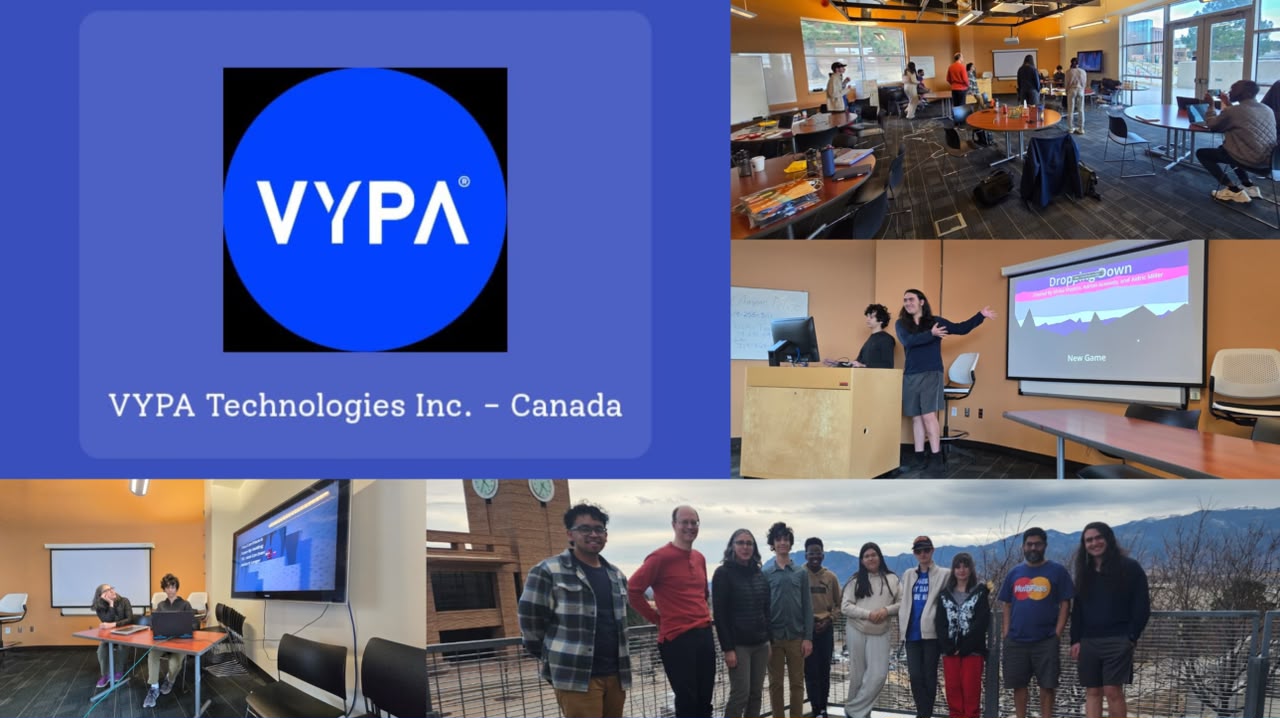
Great ideas deserve to be seen.
That’s why VYPA was proud to serve as the Digital Signage Sponsor of Hack Club Campfire. It is a global game jam that brought together hackers, aspiring game developers, musicians, and artists to learn, create, and collaborate.
Hosted by Hack Club, Campfire encouraged participants to step outside their comfort zones, build something meaningful, and connect with like-minded creators across more than 200 cities worldwide.
At VYPA, we believe innovation grows when ideas are given the visibility they deserve. Supporting events like Campfire reflects our commitment to empowering communities that are shaping the future through creativity and technology.
We’re honoured to have played a part in an event that celebrated learning, collaboration, and bold ideas.
What a Game Jam Actually Is
If you have never encountered one, a game jam is a short, intense creative sprint. Participants are given a theme and a deadline, usually somewhere between forty-eight hours and a few days, and asked to build a complete game inside it.
The constraint is the point. Nobody has time to plan for six months, seek permission, or wait until they feel qualified. You build something, you finish it, and you show it to people. Most of what gets made is rough. Some of it is genuinely good. All of it exists, which is more than can be said for the projects that never left the planning stage.
Campfire ran this format across more than 200 cities worldwide, bringing together developers, artists, musicians, and people who had never shipped anything before.
Why VYPA Supports Builder Communities
Sponsoring a game jam is not an obvious move for a digital signage company. There is no direct customer in that room.
We think that is the wrong way to read it.
VYPA exists because someone looked at an ordinary screen and asked what else it could do. That is the same instinct a game jam runs on: take the tools available, ignore the assumption that you need permission or a budget, and build the thing.
The participants at Campfire are the people who will build the next decade of technology. Some of them will start companies. Some will end up on teams solving problems nobody has named yet. Very few of them have anyone backing them right now, at the stage where backing actually matters.
Supporting them costs a company relatively little and means a great deal at that stage of a career. We would rather be the company that showed up early.
How Screens Serve a Hackathon
Beyond sponsorship, digital signage solves practical problems at events like this one, and organisers running a jam tend to discover them the hard way.
- The countdown. A visible, shared clock changes the atmosphere in a room. Everyone works to the same deadline.
- Schedules that change. Workshops shift, mentors arrive late, submission deadlines get extended. A printed schedule is wrong within two hours.
- Announcements that reach everyone. Shouting across a room full of headphones does not work. A screen does.
- Showing the work. Rotating submissions as they come in lets participants see what others are building, which raises the standard of everything.
- Recognising sponsors properly. Partners get visibility without covering the venue in vinyl that goes in a bin on Sunday night.
Visibility at the Start of Something
Most advertising money chases people who are already successful, because they are easiest to reach and safest to be associated with.
The more interesting bet is on people at the beginning, when a small amount of support changes what someone believes is possible for them. A first-time developer who ships a working game in a weekend, in a room with two hundred others doing the same thing, walks out different to how they walked in.
VYPA was proud to help make that weekend happen.
What Gets Built in Forty-Eight Hours
People unfamiliar with the format tend to assume the output is trivial. Forty-eight hours is not long, and most participants are learning as they go.
The output is often rough. That is not the measure of it.
What a jam produces reliably is a person who has now finished something. Before the weekend, they had ideas and unfinished projects. After it, they have shipped a complete piece of work, however small, and discovered that the gap between wanting to build something and having built it is smaller than they believed.
That shift is difficult to teach in a classroom and almost impossible to buy. It happens through the deadline, the peer pressure of a room full of people doing the same thing, and the moment at the end where the work is shown to others.
Why Sponsorship at This Level Matters
Large technology companies sponsor conferences attended by people who already have jobs, budgets, and career momentum. There is nothing wrong with that, but the marginal impact is small.
Supporting a community of beginners is different. The costs are modest and the effect on an individual participant can be disproportionate. Venue space, food, hardware, and the sense that someone outside the room thinks the work is worth backing all change what a first-time builder believes about their own prospects.
VYPA is a company that exists because of a question nobody had asked about an ordinary object. Backing rooms full of people asking similar questions seems like the right use of a sponsorship budget.
Here’s to more innovation, stronger communities, and More Visibility for You.